A restaurant owner opens the monthly P&L examines sales, skips down to the bottom line, and then closes the P&L.
Do you recognize yourself?
It could be an amazingly complete report, however just by examining two numbers, it leaves a lot of its value to be debated.
It shouldn’t cause them to become more dependent on an accounting firm. It should help them become more confident in their own financials. You don’t have to know every accounting rule and have to spend hours completing invoices. It is important to know the way profit has fluctuated, what’s happened to the cost of food and labor, and the issues that need to be addressed in the coming week.
Bookkeeping Chef’s ethos is to automate bookkeeping chores that don’t require the time of restaurant owners, while providing the restaurant owners with better financial data they can use.
You should begin by looking at the Weekly Numbers and Not Only Month-End
Restaurants aren’t operating on a monthly basis. Managers plan their labor for this week. The chef has ordered food for today. Vendors change prices now.
The weekly reports on Bookkeeping Chef’s prime-cost report are available alongside the monthly financial statements.
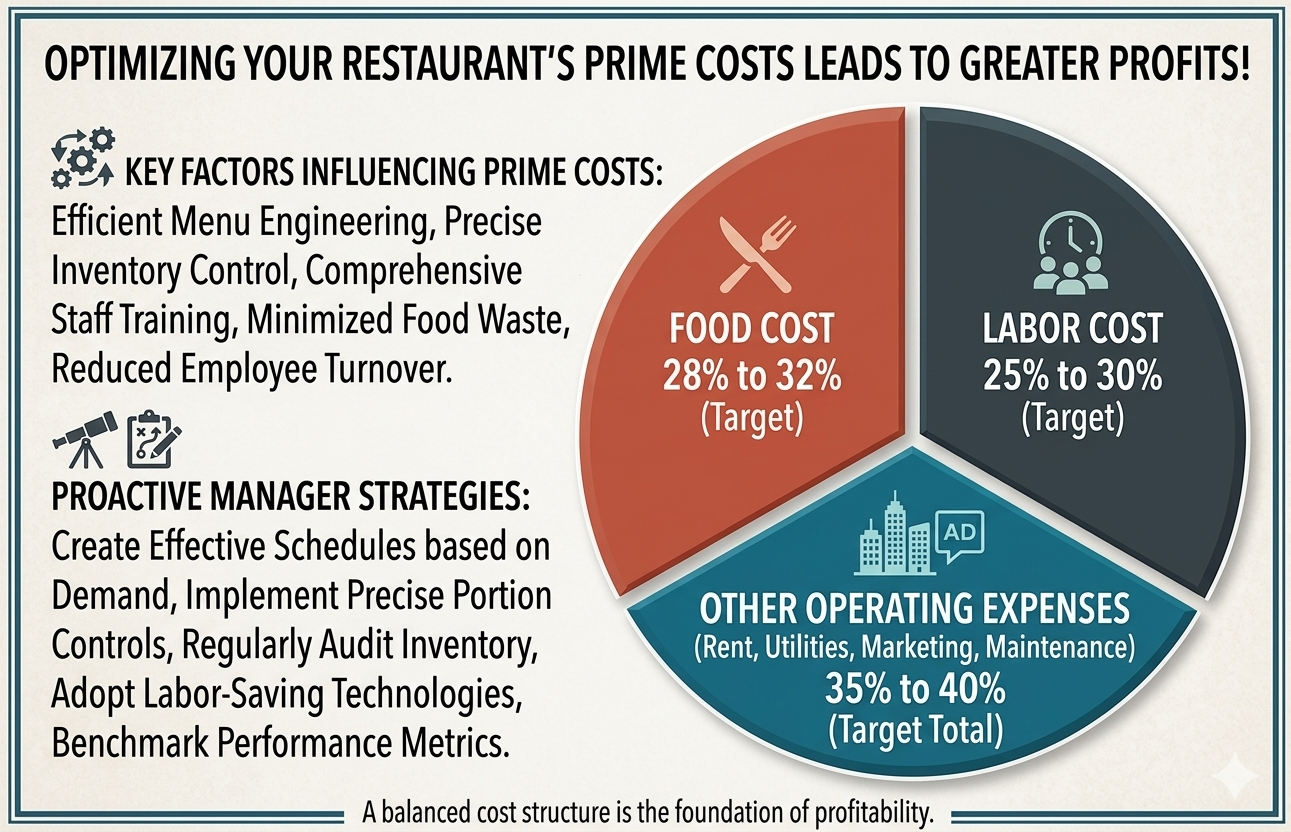
The prime cost comprises two key aspects that can be easily moved in a food service establishment: cost of goods sold, and labor. Bookkeeping Chef’s supplied information notes that prime costs usually comprise roughly 60% of restaurant sales.
Consider a situation where sales aren’t even changing while the prime cost is growing. That percentage alone doesn’t provide the answer. It gives the person in charge a reason to investigate.
Did hourly labor increase? Was there any overtime? Has the cost of food changed? The invoice for a vendor was unusually high. Does the mix of sales changed?
This is much more helpful than finding the same issue several weeks later.
Automate the repetitive Work
Bookkeeping for DIY isn’t just about manually moving POS figures into spreadsheets.
Automating the restaurant’s bookkeeping process can help eliminate repeated data movement. It integrates various systems such as POS as well as QuickBooks payroll vendor platforms and inventory management.
The goal isn’t to automate to achieve its own ends.
It’s to make it easier for manual data entry and ensure that the financial records current enough that owners have the ability to spend time looking over data instead of gathering it.
This has created a new form of bookkeeping for restaurants. The software is able to handle more of the mechanical aspects, but the owner is still tasked with the financial implications.
Learn to ask the P&L Better Questions
If you stop thinking of a P&L like a test, it becomes less intimidating.
Start with sales. Next, look at the expenses necessary to achieve the sales. Compare the performance of food and beverages. Analyze the costs of labor. Take a look at the labor.
Comparing periods.
If profit increased but sales rose, didn’t, something between those two lines occurred. Ask what changed within the organization as food prices increased. Examine sales and staffing levels to determine if the labor percent has changed. If a figure appears to be odd, investigate rather than assuming the restaurant was simply having an awful month.
Bookkeeping Chef can provide monthly P&Ls that can be completed in five business days. Business owners can look over the performance of their company without having to wait for months before receiving financial statements.
For owners searching bookkeeping restaurant solutions, speed is useful but understanding is the bigger objective.
It’s not necessary to build everything.
There is a middle ground between handing the entire accounting function to a third party and becoming your own full-time bookkeeper.
A business owner can be in the loop without manually completing every accounting task.
This could mean making use of automated systems to manage information flow, checking an annual P&L and a weekly report on primary expenses, or asking questions if something unexpected happens.
Restaurant bookkeeping services that specialize in the restaurant industry can assist owners to understand the purpose of reports by arranging the books and ensuring they are organized.
The result is not a bookkeeping owner who is skilled enough to complete every bookkeeping task.
An owner is able to have a discussion with a P&L about the business.
The aim is financial independence, Not More Reports
Restaurants already generate enormous amounts of data. Another dashboard may not be efficient.
The real value comes when an operator can look at the weekly report of prime cost and realize that something has changed, then access the P&L and figure out the best way to look into it.
Bookkeeping Chef’s strategy includes financial support for restaurants, weekly reporting and automated bookkeeping of restaurants to accomplish this.
Automate repetitive tasks. Check your prime costs every week. Learn to speak the language of your P&L.
There is no need to be a professional accountant.
It is crucial to know the finances of your restaurant before you can become a proprietor.